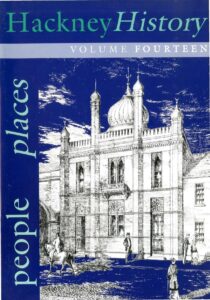
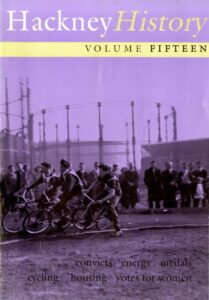
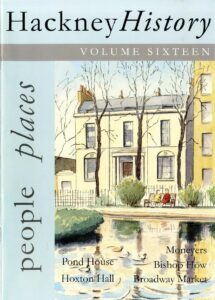
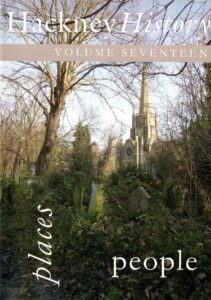
This page contains out archive of PDF copies of Hackney History. A summary of the contents lies below each cover image.
Please note that Hackney History 23 is available for sale from the Friends or the Archives. Hard copies of some of these volumes can be purchased too.
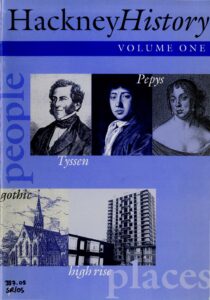
Pepys and Hackney – Homerton Gardens – The Tyssen family – Victorian nonconformists – `off the peg’ church architecture – silk maufacturers at Hackney Wick – The rise of the high rise
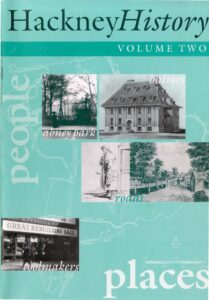
Balmes House – travel by road – a Hackney curate – the Shoreditch furniture trade – trouble at Abney Park
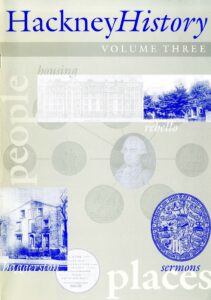
The Tyssen collection of sermons – an 18th century Jewish resident – the development of the Middleton Estate – the 1890 Housing Act and Shoreditch vestry
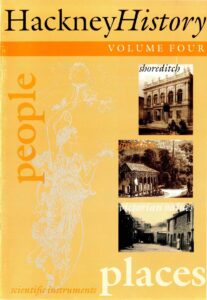
Early nonconformity – Shirley Hibberd, gardener – Victorian public health – Shoreditch Town Hall – scientific instrument-makers
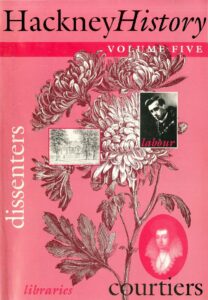
Hackney rectory in the 17th century – dissenting clergy in Restoration Hackney – Victorian chrysanthemum enthusiasts in Stoke Newington – Finsbury Park’s first voluntary library – Hackney’s first Labour council
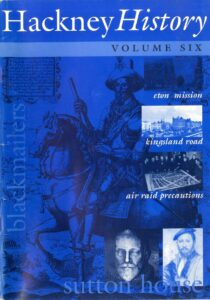
Sadleir of Sutton House – Hackney blackmailers at the court of Elizabeth 1st – 18th century development of Kingsland Road – football missionaries at Hackney Wick – Hackney led the country in air raid precautions
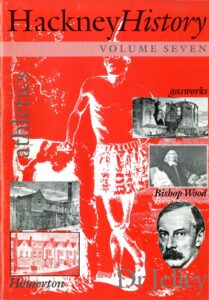
Bishop Thomas Wood of Hackney and Lichfield – Curtain Road gasworks – early athletics at Hackney Wick – Bretts, millers of Homerton – Dr Jelley, the ‘threepenny doctor’
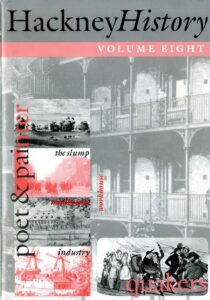
Quakers in Stoke Newington – the white lead works, Southgate Road – madhouse keepers of Hackney – the lyrical commuter – Hackney workhouse in the 1920s – surviving the 1930s slump
Excavating medieval Hoxton –Hackney Working Men’s Club – poor law in Hackney c.1900 – the Hoxton furniture trade – a street-sweeper extraordinaire – Stoke Newington’s Lancaster bomber
The Daniel Defoe collection – female emigration to Australia – patients in Hackney Workhouse infirmary – people and places represented in fiction
Early dissenting academies – the Clapton Square area in the 17th and 18th centuries – the Norris family, their apprentices and servants in the 18th and early 19th centuries – the first generation of flats – the flu pandemic of 1918-19
195 Mare Street – 19th century public house tokens and their makers – the Standard theatre in the 1870s – a Shoreditch slum – inter-war ‘working class theatre’
An 18th century bibliophile – Quaker apothecaries – cholera in Hackney in the 19th century – Harper Twelvetrees, industrialist philanthropist and campaigner – post-war council housing in Shoreditch
Newcome’s school – Pennington, actor and war hero – Quakers in Stoke Newington, 19th and 20th centuries – Victorian Turkish Baths – the Homerton H-O-G – the Lee Valley Park
‘Lives of the convicts’: a puzzle in printing – electricity generation and waste disposal in Shoreditch – mayors’ medals for children – Elizabeth and Mark Wilks, suffrage campaigners – post-war cycle speedway – Hackney Borough Council’s post-WW2 flat-building
Moneyers in the Mint from Hackney and Shoreditch – Pond House and its scandalous builder – a history of Hoxton Hall –William Walsham How, the first bishop for East London – the gentrification of Broadway Market
The earliest trade tokens for Hackney, Shoreditch and Stoke Newington – a Victorian doctor with controversial views – the mysterious disappearance of a Lower Clapton clergyman – decoding the burial registers for Abney Park – buried treasure and the story of the family who buried it
How Stoke Newington laid claim to early grandees – Shoreditch Church’s famous bells – mid-19th century middle class families of Stamford Hill – physical resistance to the Salvation Army – Laburnum Street School, from foundation to closure
Refuge for the Destitute and prison reform – the Moneyers’ Land in Hoxton – the Rhodes Estate at Dalston – Abney Park and a family burial strategy
Hackney, Shoreditch and Stoke Newington
and the Hearth Tax – The Redmonds and the Chestons: brothers who built Stoke Newington – the contribution of three metropolitan boroughs to the government housing initiative of 1919 – Sutton House Campaign – Remembering the fallen of WW1
The Almshouses of Hackney- The Grocers of Abney Park – Shoreditch Local Government The Infrastructure of 19th Century Shoreditch – Hackney’s Disinfecting Station – N.E. Postcode Signs
Arms and the Men: Hackney Terrace and the Assertion of Gentility – ‘The Original Ginger Beer’: the History of Batey & Co. Ltd. – Haggerston Baths – Rescuing Shoreditch Town Hall – The Saving of Mapledene
If you prefer to browser offline, you can download a complete Hackney History Summary Contents list and Hackney History Index below.